Strategies for Building a Profitable Retreat Business
Insights on pricing, marketing, hospitality, and the business behind transformational retreats. By Leni Cavazos.
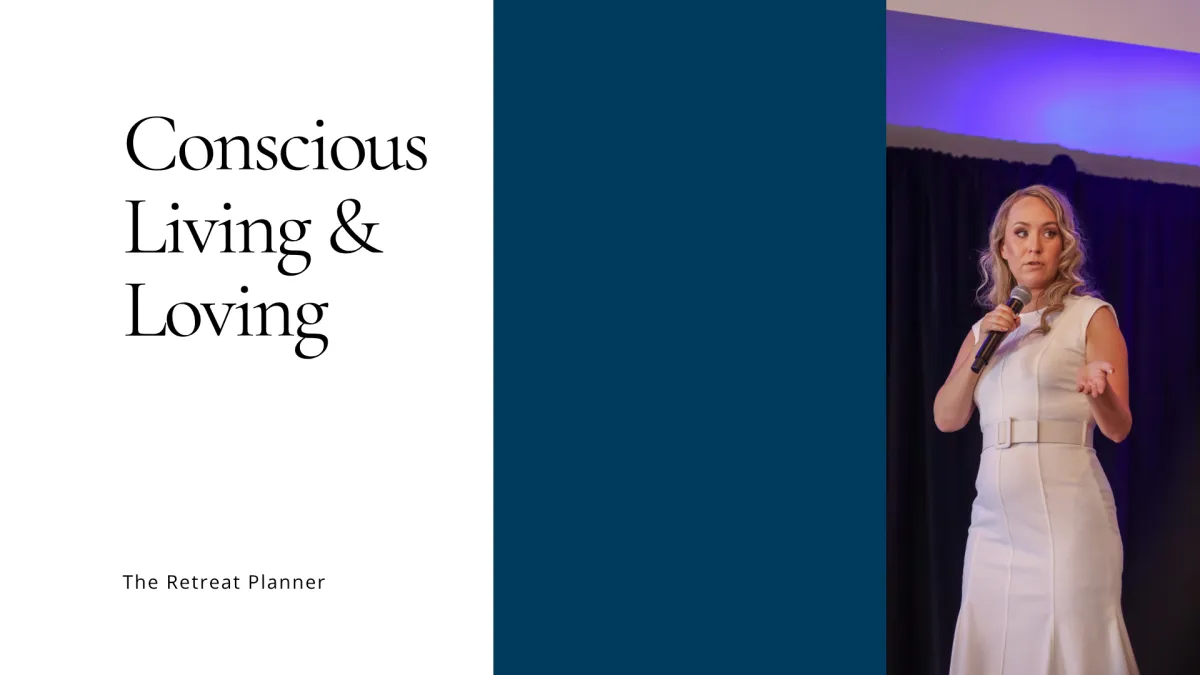
Conscious Living & Loving
Why Most People Are Living on Autopilot (And How Retreats Help You Break Free)
Most people believe they are fully in control of their lives.
They believe their decisions, reactions, and behaviors are intentional.
But what if the majority of your life is not actually being consciously chosen?
Research and experience in human behavior suggest something confronting:
we may only be fully conscious for a very small percentage of our day, while the rest is driven by subconscious patterns we didn’t intentionally create.
And this has a direct impact on how we live, how we relate to others, and ultimately, how we experience life.
The Hidden Driver Behind Your Reactions
Think about the last time something triggered you.
Maybe someone spoke to you in a way you didn’t like.
Maybe something didn’t go according to plan.
Maybe you felt stress, frustration, or anger rise instantly.
That reaction likely didn’t come from a calm, conscious decision.
It came from a pattern.
Many of these patterns were formed early in life. We learn how to respond to situations by observing the people around us, parents, caregivers, environments. These responses become automatic.
Over time, they solidify into habits.
And eventually, they start running your life.
Not because you chose them, but because they were repeated enough times to feel like truth.
Stress Keeps You Stuck in That Loop
One of the biggest reasons people stay in reactive patterns is stress.
When you are in a constant state of stress, your body shifts into survival mode. In this state, you are not operating from clarity or intention, you are operating from instinct.
This is often referred to as a “fight or flight” state.
In that state:
You react faster than you think
You default to familiar behaviors
You repeat patterns without questioning them
And most importantly, you lose access to conscious choice.
This is why so many people feel like they are living the same experiences over and over again, even when they want something different.
The Difference Between Reacting and Responding
There is a powerful distinction that changes everything:
Reacting is automatic.
Responding is conscious.
When you react, you are allowing your past conditioning to take control of the present moment.
When you respond, you create space.
That space, even if it’s just a few seconds, allows you to choose:
how you want to show up
what kind of energy you bring into the situation
what outcome you want to create
This is where transformation begins.
Not in changing your circumstances, but in changing how you meet them.
Why Retreats Are So Powerful for This Work
In everyday life, most people don’t realize how reactive they are, because they are constantly surrounded by the same triggers, environments, and routines.
There is no interruption to the pattern.
This is where retreats become transformational.
A retreat is not just a change of location.
It is a pattern interrupt.
When you step away from your daily environment, you create distance from:
habitual reactions
stress triggers
constant stimulation
This space allows you to become aware of what is actually happening inside you.
For many people, this is the first time they notice:
how often they react
how tense their body feels
how busy their mind is
And that awareness is the beginning of conscious living.
The Role of the Body in Conscious Awareness
One of the most overlooked aspects of personal growth is the body.
Your body is constantly giving you signals about your state:
tension in your shoulders
tightness in your chest
shallow breathing
restlessness
These are not random.
They are indicators that you are operating from stress rather than presence.
When people begin to relax, truly relax, they often notice something surprising:
Their body softens.
Their breathing slows.
Their thoughts become quieter.
This is not just physical.
It is a shift from survival to awareness.
The Power of Breath as a Reset Tool
One of the simplest ways to move out of stress and back into presence is through breath.
Most people change their breathing patterns when they are stressed:
breathing becomes shallow
it shifts to the mouth
it speeds up
This reinforces the stress response.
But when you consciously slow down your breath, you send a signal to your body that it is safe.
A simple approach:
breathe in slowly through the nose
extend your exhale longer than your inhale
This activates a different state, one where you are able to think, feel, and choose more clearly.
It creates the pause needed to move from reaction to response.
Every Decision Comes Down to One Choice
At a deeper level, many decisions can be simplified into one core question:
Am I choosing from love or from fear?
This may not always be obvious on the surface.
But when you look deeper, most reactions are rooted in:
fear of being disrespected
fear of losing control
fear of not being enough
fear of uncertainty
Whereas conscious responses tend to come from:
clarity
self-trust
compassion
intention
The shift from fear to love is not about being passive or avoiding boundaries.
It is about acting from alignment instead of conditioning.
Why Relaxation Is the Real Work
Many people approach personal growth as something they need to “fix.”
They focus on:
healing past experiences
removing blockages
analyzing problems
But there is a different perspective that is often more effective:
What if the goal is not to fix, but to relax?
When you constantly focus on what is wrong, you reinforce it.
You give it energy.
But when you shift your focus to presence, relaxation, and awareness, something else happens:
The patterns begin to lose their intensity.
Not because you fought them, but because you stopped feeding them.
Living Consciously Is a Practice
Conscious living is not a one-time decision.
It is a moment-to-moment practice.
It looks like:
pausing before reacting
noticing your breath
observing your thoughts without immediately believing them
choosing how you want to show up
And most importantly, it requires creating environments where this is possible.
This is why intentional spaces, like retreats, are so powerful.
They give you the space to practice being present, without the constant pull of your usual patterns.
Most people are not lacking discipline, motivation, or desire.
They are simply operating from patterns they didn’t consciously choose.
Breaking free from that doesn’t require force.
It requires awareness.
It requires space.
And it requires the willingness to pause long enough to choose differently.
Because in the end, transformation doesn’t happen when life changes.
It happens when you become conscious within it.

Ready to Build a Retreat Business That Matches Your Vision?
Join the free Sold Out & Profitable Masterclass and learn the framework behind retreats that fill and profit consistently.